
Sometimes the journey is about going somewhere. Sometimes it is about paying closer attention once you arrive.
Practise yoga beside the ocean. Spend a weekend at a retreat. Join a meditation centre in a new city. Wake early at a residential practice centre. Sit in silence. Move slowly. Or simply add one thoughtful class to a much larger journey.
Across Canada, yoga and meditation take many forms—from contemporary studios and island retreats to residential meditation centres and long-established spiritual traditions.
Nails Blaze helps you discover the practice, setting and level of commitment that fit the experience you are looking for.
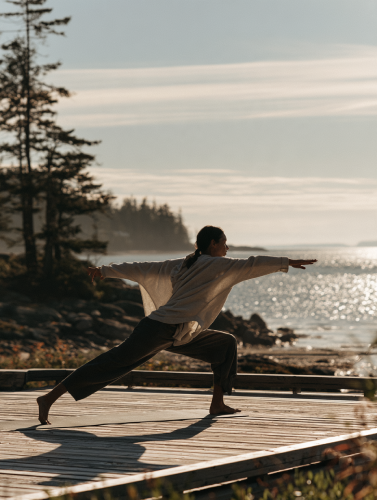 Move
Coastal rainforest & open deck
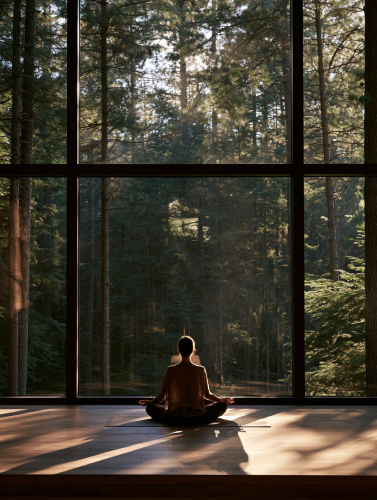 Be Still
Window to Canadian pine forest
A yoga experience may be physically active or almost completely restorative. A meditation session may last ten minutes—or become part of a multi-day residential course.
Some journeys combine both: morning movement, quiet sitting, walking meditation, time outdoors, meals, study, conversation, silence.
The word wellness may bring these experiences onto the same Nails Blaze page, but they should not lose the traditions and contexts that make them different. The goal is not to find the most spiritual-looking experience. It is to find authentic alignment.
Whether dynamic Vinyasa flow, grounding restorative Yin, breathwork, or traditional Buddhist mindfulness.
From cedar oceanfront pavilions and Gulf Island studios to off-grid rural monasteries and quiet downtown spaces.
Lineage holders, monk-teachers, certified studio instructors, or visiting retreat facilitators.
From a single 60-minute drop-in during a city trip to a rigorous 10-day silent residential immersion.
Preserving philosophical and cultural roots without commercial dilution or medical exaggeration.
Practices are not identical. From dynamic heat to absolute stillness, explore where your personal journey begins today.
Choose an entry point that matches your travel schedule and comfort level.
Drop in while exploring a Canadian city or coastal town. A low-barrier way to centre yourself between travel days.
Workshops, immersions, or day retreats that fit into a longer trip without overnight commitment.
Friday evening to Sunday afternoon. Often hosted at a retreat centre or rustic lodge surrounded by nature.
Deep immersion in practice, community meals, daily meditation, movement, and spacious outdoor quiet.
Disciplined, tradition-specific mental training such as 10-day Vipassana or monastic stays requiring preparation.
Understanding the institutional context of a practice ensures respect for tradition and clear alignment with your personal intentions.
Drop-in classes, beginners, travellers, and shorter sessions. Studios may feature heated Vinyasa, Yin, restorative, or secular mindfulness in urban community spaces.
A dedicated retreat venue bringing together yoga, meditation, movement, nourishing cuisine, nature trails, and visiting facilitators rather than adhering to one single lineage.
Centres and ashrams that explicitly teach within an established philosophical tradition (such as Sivananda Vedanta or Yasodhara Yoga) preserving authentic terminology.
Monasteries and centres rooted in specific traditions (such as Theravāda or Thai Forest). We describe them factually rather than flattening Buddhist practice into commercial spa mindfulness.
Specialized residential centres offering rigorous 10-day courses in Vipassana meditation as taught by S.N. Goenka. Disciplined mental training courses, not casual wellness holidays.
Retreats where verbal conversation is consciously suspended. Providers clearly outline how much silence is expected—from quiet mornings to multi-day complete noble silence.
Yoga and meditation have deep histories, spiritual lineages, and philosophical origins that must never be flattened into superficial marketing slogans like “ancient eastern secrets for modern stress.”
We avoid exoticizing Indian traditions, Buddhist monastic codes, and Sanskrit terminology. When a Canadian provider identifies its own lineage, Nails Blaze presents that identity respectfully, accurately, and without commodification.
A retreat replaces urban frenzy with an intentional cadence of movement, contemplation, and spacious rest.
The day opens gently. At an ashram or monastery, this might mean dawn meditation or silent sitting; at a coastal yoga lodge, gentle pranayama and morning sunlight.
A primary practice block: an energizing Vinyasa or Hatha flow, walking meditation under towering cedar trees, or guided Dharma teachings.
Nourishing plant-based meals. Some retreats cultivate lively community conversation around long wooden tables; others honour quiet eating in noble silence.
Spaciousness between sessions. Walking forest trails, journaling, reading where permitted, resting on a sunny porch, or simply watching water move.
A secondary practice shift: restorative Yin postures, sound immersion, somatic inquiry, or breathwork that guides the nervous system into evening stillness.
Satsang, evening chanting, guided Metta meditation, campfire discussion, or early preparation for restful sleep in peaceful natural darkness.
Important Editorial Note: This timeline is an illustrative overview of retreat cadences. Actual schedules vary significantly by provider, tradition, and whether the program is drop-in, self-guided, or intensive residential.
From salt-mist coastlines and mountain ashrams to downtown community meditation halls.
Taking a ferry creates an immediate psychological threshold. British Columbia islands like Cortes, Bowen, Salt Spring, and Gambier offer secluded ocean sanctuaries where practice flows with maritime tides.
Hidden amid deep spruce, cedar, and pine, forest monasteries and practice centres immerse the senses in clean air, natural stillness, and grounding earth.
Urban yoga and meditation communities in Vancouver, Calgary, Toronto, Montréal, and Halifax provide restorative drop-in anchors between business meetings or cultural sightseeing.
Rolling rural hills, agricultural silence, and large acreage provide uncluttered visual horizons for multi-day walking meditation and quiet restorative living.
Water reflections and mountain silhouettes invite deep stillness. For travellers who wish to pair contemplative practice with forest bathing and trail hiking.
Many premier Canadian teachers operate out of an urban home studio but periodically lead destination retreats across coastal BC, the Rockies, or rural Ontario. Look for retreat venue details on every listing.
Explore how practice expresses itself across Canadian provinces and territories.
Essential practical clarity to ensure your expectations and the provider’s reality harmonize.
A "yoga retreat" may mean two optional morning and evening classes with generous free time for swimming and wine tasting—or an intensive ashram schedule beginning at 5:00 AM with mandatory study and karma yoga service. Always request and examine the full daily itinerary before placing a deposit.
Never assume all retreats welcome absolute beginners. Many programs celebrate mixed levels, but certain Vipassana courses, advanced pranayama retreats, or teacher intensives have prerequisite courses or daily sitting requirements.
Silence ranges from gentle morning quiet until breakfast, to silent meals, to complete "Noble Silence" (no eye contact, speaking, writing, or phone use) for 10 consecutive days. Clarify your comfort level with silence in advance.
Look for transparent bios detailing your teachers’ lineages, formal training hours, and teaching approaches. A polished social-media presence does not guarantee grounded, safe somatic guidance or trauma-informed leadership.
A Theravāda Buddhist forest monastery and an urban boutique wellness lodge provide fundamentally distinct atmospheres. Neither should be disguised as the other. Monasteries observe traditional precepts (such as no food after noon or specific attire).
Physical demands vary widely. Dynamic Ashtanga requires vigorous mobility; multi-day Vipassana requires sustained hours on a meditation cushion. Ask about chair availability, meditation benches, wall support, and physical accessibility.
Confirm whether your retreat fee covers accommodation, all meals, tuition, equipment (mats/blocks/cushions), and local transfers. Some centres (like Vipassana and Buddhist monasteries) operate on dāna (voluntary donation) rather than fixed commercial fees.
Nails Blaze firmly rejects unsubstantiated wellness pseudoscience, pseudo-medical marketing, and predatory healing promises.
Provider promotional websites often feature exuberant marketing claims. Nails Blaze does not copy these claims into our directory or editorial features.
Yoga and meditation provide profound physical and mental benefits, but they do not replace licensed psychotherapy, trauma clinical care, psychiatric treatment, or medical interventions.
If you have medical, psychiatric, mobility, or other health considerations that could affect prolonged sitting, physical movement, or psychological stability, please review provider requirements thoroughly and consult qualified medical professionals prior to booking.
There is no badge for jumping into the deepest water. Choose the entry point that genuinely supports your nervous system and travel capacity today.
Zero pressure. Drop in for a 60-minute studio flow or evening Yin session during travel.
Spend an unhurried Saturday immersing in breathwork, alignment, or introductory meditation.
Two nights away combining yoga, mindful meals, natural landscapes, and quiet recovery.
A dedicated four-to-seven-day rhythm with daily schedules, quiet mornings, and deeper focus.
Ten-day Vipassana, monastic residency, or ashram study requiring disciplined commitment.
Mindfulness weaves naturally into retreats, wilderness trails, thermal springs, and regional cuisine.
A quiet practice can change what we notice: the curve of a leaf, a colour shifting in the dusk sky, the repetition of a cedar pattern, the ripple of ocean water, the delicate geometry inside a mountain bloom.
Nature, sustained observation, and creative tactile expression have always formed the foundation of Nails Blaze. Explore the original creative side of our brand through nail art inspired by Canadian landscapes, flora, and seasonal rhythms.
Nails Blaze welcomes relevant yoga studios, retreat venues, Buddhist centres, Vipassana organizations, residential ashrams, and qualified teachers across Canada.
Discover yoga retreat centres, meditation organizations, studios, residential practice centres, and contemplative destinations. British Columbia receives expanded coverage, while the collection spans across Canada.
Important Trust Note: Programs, schedules, teachers, and retreat availability change. Always confirm current dates, eligibility, participation requirements, and contact information directly with the provider.