COLOUR →
Chromatics
Trace the subtle gradation from pale lime green along emerging shoots to deep forest emerald in mature foliage. Notice how chlorophyll filters morning sun into a translucent golden aura.

Notice Nature at Its Smallest Scale.
You don't need to disappear into wilderness to reconnect with nature.
Sometimes it begins with one flower. The architecture of a leaf. The scent of a herb garden. A century-old tree. A greenhouse filled with plants from climates far beyond Canada. Or a garden you intended to cross in twenty minutes—but stayed in for two hours.
Across Canada, botanical gardens, arboreta, conservatories, public gardens and plant-rich landscapes offer a gentler way to experience nature.
Look closer. Wander slower. Let plants become the destination.



You Don't Have to Understand It to Notice It.

Most gardens contain more detail than we could absorb in a day. So don't try.
Choose one plant. Look at its shape. Notice where new growth begins. Compare the front and back of a leaf. Look at how rain sits on its surface. Notice whether insects visit it. Find another plant that looks completely different.
Botanical wellness doesn't require becoming a botanist. It begins with something much simpler: Attention.
Trace the subtle gradation from pale lime green along emerging shoots to deep forest emerald in mature foliage. Notice how chlorophyll filters morning sun into a translucent golden aura.
Serrated, lobed, smooth, or curling gently under. The margin of every leaf records how it sheds rainwater, defends against wind shear, and regulates transpiration in changing humidity.
Mathematical fractal bifurcation. A primary central midrib divides into secondary ribs and microscopic capillary networks that mirror river deltas, lungs, and lightning bolts.
How the cuticle refracts daylight. Morning dew forms spherical lenses that magnify cell structures, while waxy epidermal coatings cast a subtle soft-matte sheen.
Compare the glossy, waterproof top surface with the softly ribbed, matte underside dotted with microscopic stomata. Visual texture creates physical grounding without disturbing the plant.
How Do You Want to Look?
Select a lens filter below. The interactive botanical glass focuses attention onto specific biological rhythms, inviting you to see beyond generic green.


Forget the name for a moment. Find the deepest colour. Then the palest. Notice how dramatically a garden palette changes through the season.
Find three colours you wouldn't normally describe as “green.”

Nature connection doesn't require remoteness.
Botanical gardens can make meaningful nature experiences possible within cities and while travelling without extensive outdoor equipment, wilderness skills or long journeys.
They can also introduce visitors to ecology, conservation, horticulture and plants they might otherwise overlook.
For some travellers, that accessibility isn't a compromise. It's exactly the point.
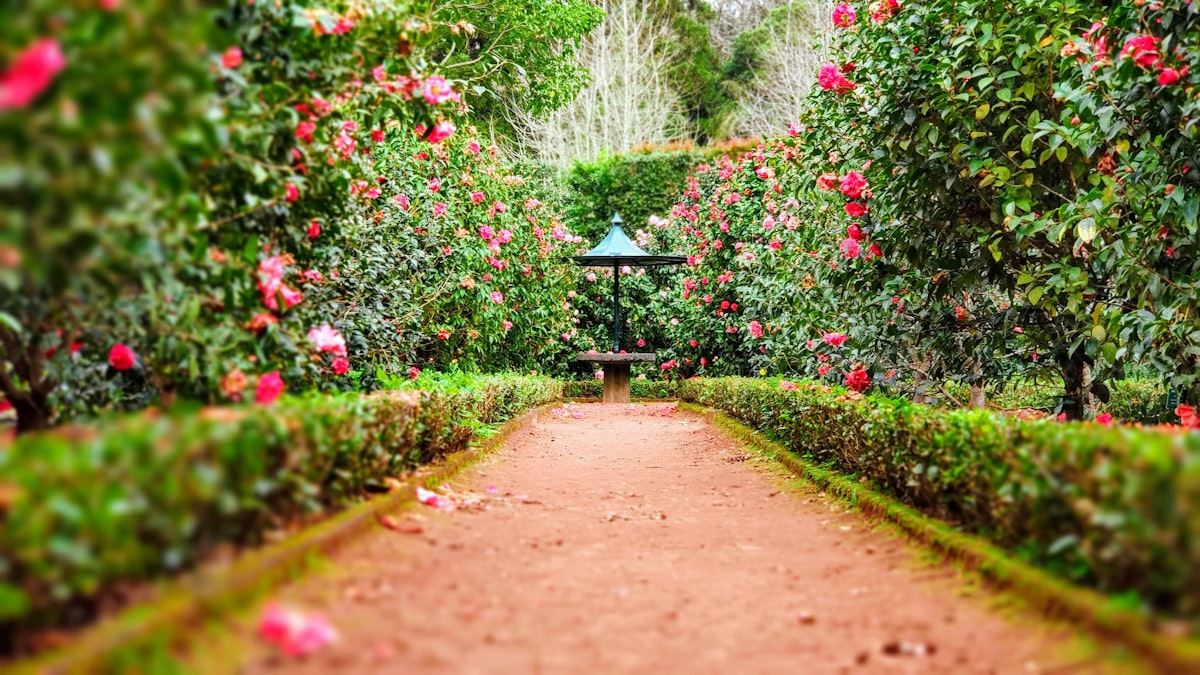
Six distinct environments offering unique sensory, psychological, and spatial benefits.
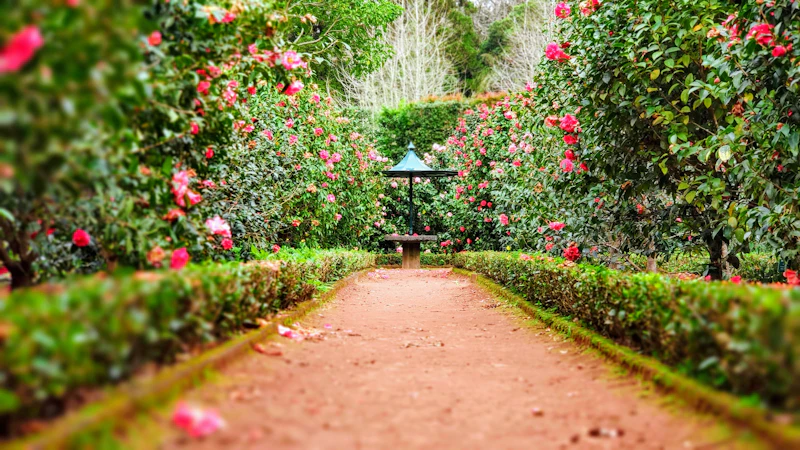 BOTANICAL GARDEN
Curated Biodiversity & Scientific Heritage
Living museums dedicated to conservation, taxonomy, and plant science. Their curated collections allow visitors to wander through distinct eco-zones—from alpine rockeries to medicinal herb gardens—in a single afternoon.
 ARBORETUM
Scale, Longevity & Cathedral Canopies
Botanical spaces specifically devoted to trees and woody plants. Arboreta offer profound sensory groundings through towering overhead foliage, rustling wind acoustics, and living witnesses that span multiple centuries.
 CONSERVATORY
Warmth, Respite & Winter Vitality
Glasshouse sanctuaries that maintain warm, humid microclimates year-round. In Canadian winters, stepping inside provides an instant physiological thaw, surround sound of dripping water, and fragrant tropical air.
 PUBLIC & COMMUNITY
Neighbourhood Heart, Daily Habit
Accessible public spaces interwoven into the urban fabric. These require no tickets, no booking, and no preparation. They become daily wellness checkpoints for dog walkers, commuters, and quiet morning thinkers.
 WALLED & HISTORIC
Acoustic Shielding & Contemplative Solitude
Masonry walls create quiet acoustic microclimates that deflect wind and city rumble. The combination of historical architecture, sun-baked brick, and fragrant heritage perennials fosters immediate mental quietude.
 SCULPTURE & LANDSCAPE
Creative Perspective & Guided Vistas
Where deliberate human art and living vegetation hold equal dialogue. Curated pathways frame focal vistas, encouraging visitors to shift between artistic contemplation and organic appreciation.
Remarkable public gardens across Canada that offer deep botanical immersion. Click any destination card to open its field profile.
QUEBEC
One of the greatest botanical gardens in the world, spanning 75 hectares with 22,000 plant species and 10 exhibition greenhouses.
BRITISH COLUMBIA
A world-renowned 55-acre botanical showcase transformed from an abandoned limestone quarry on Vancouver Island.
ONTARIO
Canada's largest botanical garden, bridging 1,100 hectares of cultivated display gardens and environmentally sensitive Carolinian wetlands.
BRITISH COLUMBIA
A 55-acre oasis in the heart of Vancouver representing over 7,500 plant taxa organized by global geographic region.
ALBERTA
The northernmost major botanical garden in Canada, home to the award-winning 4.8-hectare Aga Khan Garden.
NOVA SCOTIA
One of North America's finest surviving Victorian horticultural gardens, established in 1867 and enclosed by ornate wrought-iron gates.
 ALBERTA
Edmonton’s landmark botanical conservatory featuring four distinct glass pyramid biomes set along the North Saskatchewan River valley.
ONTARIO
Established in 1889 at the Central Experimental Farm, housing over 2,000 distinct species of mature cold-hardy trees along the Rideau Canal.
In Canada, gardens are not static summer-only attractions. Each season transforms the visual architecture and sensory resonance of living collections.

After months of snow and grey branches, the sudden eruption of snowdrops, crocuses, and unfurling fiddleheads delivers a tangible psychological jolt. The scent of thawed damp soil and sweet magnolia blossoms cues renewal across Canadian garden paths.
Engaging other senses unlocks deeper mental restoration. Four ways to experience plants with your full sensorium.
OLFACTORY IMMERSION
Gently graze rosemary, lavender, mint, or spruce needles between your fingers without tearing the plant. Aromatherapy in living gardens is dynamic, changing with humidity, sunshine, and afternoon heat.
Plant phytoncides and aromatic terpenes travel straight to the olfactory bulb and amygdala, decreasing cortisol within minutes.
CANOPY REST
Find a garden bench beneath a mature oak, pine, or weeping willow. Lean back, release neck tension, and gaze upward into the green fractal ceiling swaying against sky and cloud.
Viewing naturally repeating fractal branches induces alpha brain waves associated with alert relaxation and stress reduction.
INTENTIONAL FOCUS
Carry a small notebook or camera. Spend fifteen uninterrupted minutes capturing the veins of one leaf or the spirals of a single blossom. Perfect drawing skill is irrelevant—deliberate attention is the goal.
Deep focal concentration anchors attention in the immediate present, interrupting loop patterns of worry or digital fatigue.
WINTER SANCTUARY
In sub-zero Canadian winter, shed your heavy coat and step into a humid 24°C conservatory. Breathe in moist tropical air, listen to cascading rock fountains, and bask in natural sunlight filtered through glass.
Warmth, high relative humidity, and lush green surround counter Seasonal Affective Disorder (SAD) and relieve respiratory dryness.
A botanical visit for well-being differs fundamentally from a sightseeing tour. Four shifts that transform your visit into restorative therapy.
Arrive when the gates first open or in the final two hours before dusk. Morning dew magnifies plant scent and cellular texture; low evening sun casts long, meditative shadows while large tour crowds have already dissipated.
You are under no obligation to traverse all 70 acres of a botanical institution. Spending two hours in a single stone courtyard or sitting beside one weeping willow yields far deeper autonomic grounding than rushing across twenty pavilions.
Canadian botanical grounds fluctuate widely. Outdoor arboretum ridges catch brisk wind off adjacent lakes; conservatories can exceed 26°C with 80% humidity. Wear easily removable breathable layers so physical comfort never interrupts presence.
Stay on established stone and crushed gravel pathways to protect delicate root systems and avoid soil compaction. Never pick blossoms or harvest seeds; allow the plant’s life cycle to complete undisturbed for the next visitor and wild pollinator.
Select what your body and mind are seeking today. Our botanical matching model will curate your archetype, pacing, and practice.
Choose a walled heritage garden or Japanese courtyard enclosed by masonry or dense bamboo hedges. The hard surfaces deflect city traffic noise, letting your parasympathetic system activate through rhythmic fountain sounds.
“I am not here to consume or inspect. I am here to sit among living things that have no rush.”
In a world defined by urgency, screens, and speed, botanical gardens offer the rare permission to move at the speed of chlorophyll, sunlight, and soil. When you step inside a garden, remember: you are not visiting nature—you are returning to it.